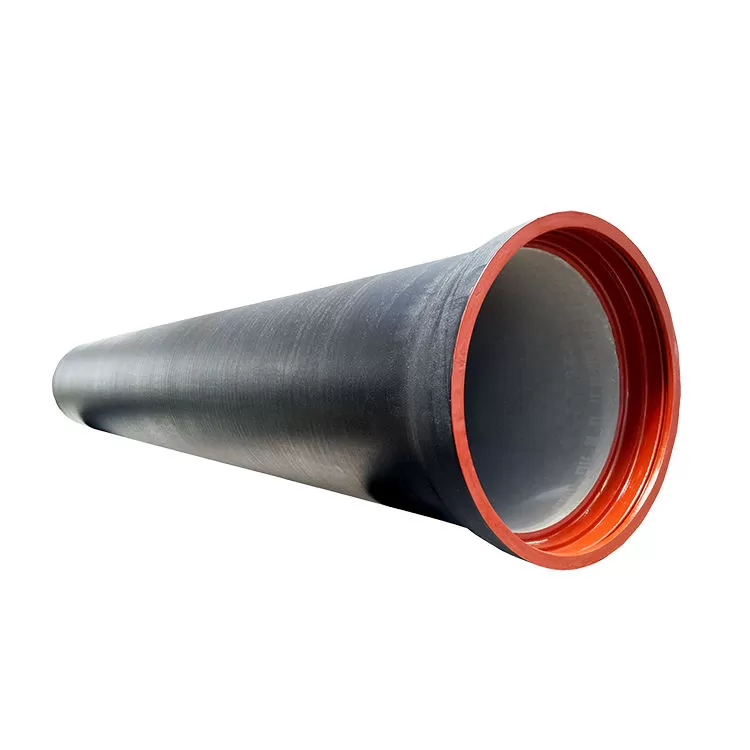
Flange
Our flanges are engineered to provide secure, leak-free connections for pipeline systems across municipal, industrial, and energy sectors. Designed to meet international standards and project requirements, they ensure reliable performance in critical applications including water supply, wastewater treatment, oil & gas, petrochemical, and power plants.
Midas is a manufacturer of all types of pipe flanges and has been supplying flanges to the petrochemical, power generation and water plant industries since its inception. Our mission is to exceed our customers' expectations for service and quality and strive to meet the highest standards in the industry. Today, we are proud to offer a wide variety of flange types. Whether you require a custom flange or a specialized machined component, our experts can meet your needs.
Midas specializes in manufacturing all types of flanges, including carbon steel, stainless steel, and alloy options. Styles we offer slip-on flanges, socket weld flanges, thread flanges, weld neck flanges and blind flanges, and custom flanges in sizes from 1/2″ to 203″, catering to diverse industrial needs with precision and quality. All our flanges comply with ANSI, MSS, AWWA, DIN, UNI, JIS, BS, SABS, EN1092, GOST standards, also we can produce according to customers’ drawings.
We provide flanges in a variety of materials to meet specific environmental and operational demands:
Carbon Steel (CS): High strength and cost-effective for general applications.
Stainless Steel (SS304 / SS316): Excellent corrosion resistance for aggressive environments.
Alloy Steel: Enhanced mechanical properties for elevated temperature and pressure systems.
Ductile Iron / Cast Iron: Suitable for water distribution, wastewater, and low-pressure systems.
Each material is manufactured with strict quality control and tested to ensure durability, long service life, and compliance with international standards.
Our flanges conform to a range of global quality and dimensional standards, ensuring compatibility and reliability in international projects:
ANSI / ASME – American National Standards for Pressure Vessel and Piping Flanges
AWWA – American Water Works Standard for water and wastewater piping systems
DIN / EN / ISO – European and International Standards for flange dimensions and tolerances
JIS – Japanese Industrial Standard for flange manufacturing
Our flange products are widely used in:
Municipal water supply and distribution systems
Sewage and wastewater treatment networks
Oil and natural gas pipelines
Chemical processing plants
Power generation facilities
HVAC and industrial piping systems
Manufactured under strict quality management systems and international standard compliance
Precise machining, tight tolerances, and excellent surface finish
Comprehensive flange types and custom design services
Professional technical support for project specification and design consultation
Flexible supply capabilities for both small orders and large-scale infrastructure projects
Choosing the right flange depends on the application requirements, including pressure class, connection method, and environmental conditions:
High Pressure & High Temperature: Weld neck flanges are recommended for their strength and integrity.
General Purpose Piping: Slip-on flanges offer easy installation and cost-effectiveness.
Inspection & Maintenance Needs: Lap joint flanges facilitate frequent assembly and disassembly.
Sealing & Shutdown Points: Blind flanges provide robust closure points for pipelines or valves.
Weld neck flanges are designed to be welded to the pipe, offering superior strength and are ideal for high-pressure systems. Slip-on flanges slide over the pipe and are welded at the inner and outer edges, making installation easier but slightly less robust under extreme conditions.
Stainless steel (e.g., SS316) offers excellent corrosion resistance and is recommended for aggressive environments such as chemical processing or marine applications.
Pressure class depends on the operating pressure and temperature of your system. Consult relevant standards such as ANSI/ASME or AWWA to determine the appropriate rating for your project.
Slip-on Flanges: Slip-on flanges are circular components designed to slip over the end of a pipe and are then welded around the joint, both inside and outside. They provide a simple and cost-effective means of joining pipes and fittings, often used in low-pressure and moderate-temperature applications. Commonly applied in water and wastewater systems, as well as in various industrial pipelines, slip-on flanges are favored for their ease of installation and alignment.
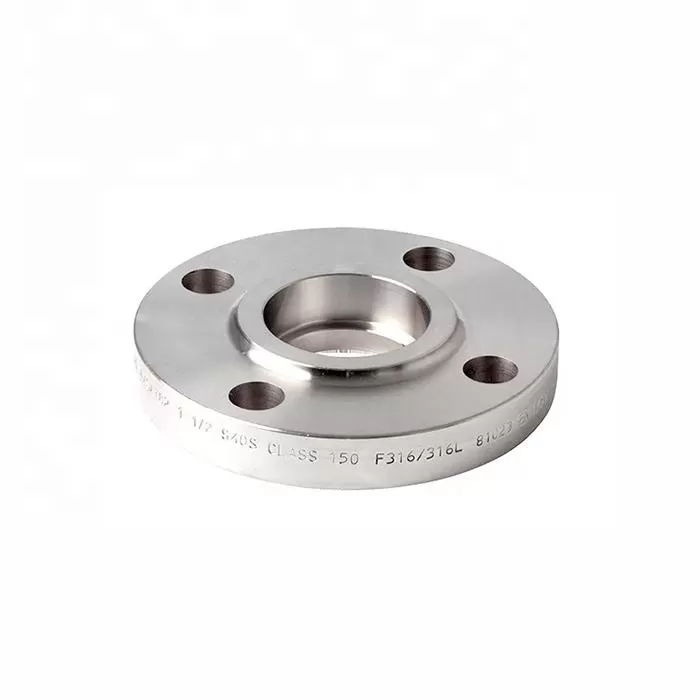
Socket Weld Flanges: Socket weld flanges are flanges that fit into a pipe socket and are then welded around the joint, offering a robust and durable connection. They are ideal for high-pressure and high-temperature environments, such as in the oil and gas industry, chemical processing, and power generation. Socket weld flanges ensure a leak-tight seal and are used in applications where strength and reliability are critical.
Thread Flanges: Thread flanges are flanges with internal threads that allow them to be screwed onto a pipe with matching external threads. They are used to provide a secure and easily dismountable connection without the need for welding. Commonly applied in low-pressure systems, such as in water and gas pipelines, thread flanges are often used in situations where frequent disassembly is required.
Weld Neck Flanges: Weld neck flanges are flanges with a long, tapered neck that is welded to a pipe, providing a strong, smooth transition between the pipe and the flange. They are designed for high-pressure and high-temperature applications, such as in power plants and petrochemical industries. Weld neck flanges are preferred for their ability to handle significant stresses and thermal cycling, ensuring long-term reliability and performance.
Blind Flanges: Blind flanges are solid flanges with no central hole, used to seal the end of a pipeline or vessel. They are designed to provide a tight seal and prevent the flow of fluids or gases from exiting the pipe. Blind flanges are commonly used in applications such as pressure vessels, valve closures, and pipeline terminations, where a permanent or semi-permanent seal is required.
Industrial flanges manufactured in a variety of different material grades:
Midas is best known for carbon steel or stainless steel flanges, but we actually offer over a dozen different material grades. The most popular material grade is made from carbon steel. Midas not only offers carbon steel pipe flanges and flange accessories, but also stainless steel flanges for a variety of projects. Plate flanges can be ordered for water plant and petrochemical applications. Bar flanges and forged specification flanges can also be manufactured to sizes from our catalog.
Stainless Steel —> A 182 / A 240, SA 182 / SA 240
Carbon Steel —> ASTM A105, ASME A105
ASTM A266 GR.1, GR.2, GR.3, GR.4
ASTM A350 LF1, LF2 CL1/CL2, LF3 CL1/CL2
ASTM A694 F42, F46, F48, F50, F52, F56, F60, F65, F70
Alloy steel —> ASTM / ASME A182 F1 / F5 / F9 / F11 / F22 / F91
A flange is a mechanical component used to connect pipes, valves, or other equipment in a piping system. It typically features a flat surface with holes for bolts, allowing it to be securely attached to another flange or equipment.
Common types include slip-on flanges, socket weld flanges, thread flanges, weld neck flanges, loose flanges, and blind flanges. Each type serves specific purposes and applications based on pressure, temperature, and ease of maintenance.
Select a flange based on factors such as pressure and temperature requirements, the type of connection needed, and the material compatibility. Consider the specific application environment and whether you need a permanent or removable joint.
Flanges are commonly made from materials such as carbon steel, stainless steel, alloy steel, and various other metals. The choice of material depends on the application's pressure, temperature, and corrosion resistance requirements.
Flanges are installed by aligning the flange faces, placing a gasket between them, and bolting them together. Proper alignment and torque of the bolts are crucial to ensure a leak-tight seal and proper functioning.
A slip-on flange is easier to install and is used in lower pressure applications, while a weld neck flange provides a stronger, more durable connection, making it suitable for high-pressure and high-temperature environments.
Yes, certain flanges, such as weld neck and socket weld flanges, are designed to withstand high temperatures and pressures. Be sure to select the appropriate material and flange type for your specific temperature requirements.
A blind flange is used to close the end of a pipeline or vessel, effectively sealing it off from the system. It prevents the flow of fluids or gases and is commonly used for maintenance, pressure testing, or to seal off unused piping sections.


Send an Inquiry
You can tell me what you want and I'll do it for you